
FOR THE BUYER
Ask each supplier to confirm nominal pieces per coil and coils per carton, then compare the total pieces and price per 1,000 on the same delivery basis.
Worked example: the same carton count can represent different nail quantities
Calculation
Hypothetical package A
Hypothetical package B
Assumed nominal nails per coil
300
400
Assumed coils per carton
30
30
Nominal nails per carton
300 × 30 = 9,000
400 × 30 = 12,000
Nominal nails in 100 cartons
9,000 × 100 = 900,000
12,000 × 100 = 1,200,000
Whole cartons for a target of 900,000 nominal nails
900,000 ÷ 9,000 = 100 cartons
900,000 ÷ 12,000 = 75 cartons
Convert a carton price to a price per 1,000 nominal nails
Carton price ÷ 9,000 × 1,000
Carton price ÷ 12,000 × 1,000
Worked example, not a quote or an available packing offer. Thirty coils per carton is an assumed input for the arithmetic. The example does not establish that one nail size is available in both coil counts or that either package fits a particular tool. Confirm actual packing and count-tolerance treatment for each SKU; compare prices in the same currency and delivery basis.
A carton is a package, not a fixed quantity
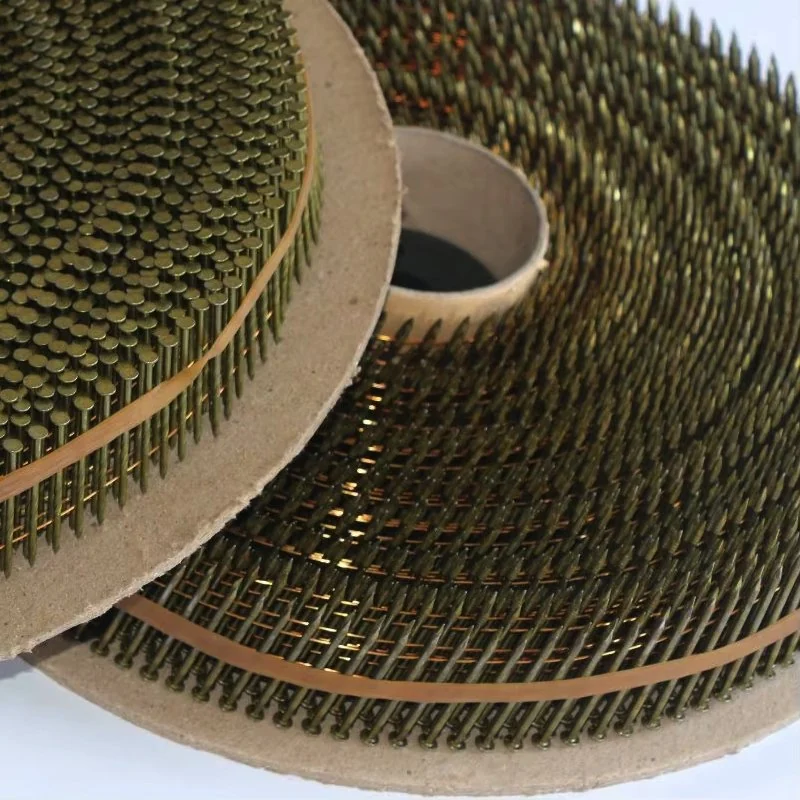
Two coil-nail quotations can describe the same diameter and length while supplying different quantities. One supplier may quote per thousand nails, another per coil, and another per carton or tonne. Before comparing them, establish the unit behind the price and the number of saleable fasteners represented by that unit.
In the supplied reference catalog, nominal coil counts vary by listed size: 400, 300, 240, 225 and 200 pieces appear in the table, with a stated count tolerance of plus or minus two. These are reference values for those rows. They are not a promise that every size can be supplied in every coil count.
Write the quantity calculation into the enquiry
Consider a hypothetical packing proposal of 300 nails per coil and 30 coils per carton. It contains 9,000 nominal nails per carton. With 400 nails per coil and the same 30-coil carton, the result is 12,000. Ordering 100 cartons would therefore mean 900,000 or 1,200,000 nominal nails. This example illustrates packaging arithmetic, not an Elite packing offer.
Use the same logic when planning a target quantity: divide required pieces by pieces per coil, then by coils per carton, and agree how partial cartons are handled. Ask whether the quotation uses nominal counts and how any stated tolerance is handled in order quantity and acceptance. Keep net product weight separate from carton and pallet gross weight.
Check whether the larger coil fits the equipment
More nails in a coil is useful only if the equipment accepts the proposed feed package. Confirm coil outside diameter, height, winding direction and feed geometry with the tool or line supplier. For automatic equipment, request the feeder requirements as well as the nail-driving specification.
MAX publishes a magazine capacity of 225–300 for its own CN70. That original-manufacturer example shows why the word coil and a matching angle are insufficient to approve a 400-piece package. It does not establish compatibility for another manufacturer’s CN70-style tool. Jumbo coils likewise need their own equipment and packaging confirmation.
Make the packing specification useful after delivery
Request a carton label that identifies the product reference, dimensions, material or finish, nominal count and traceable lot or order reference. If cartons contain more than one item, ask for a packing list that separates each SKU rather than presenting only a combined total.
For warehouse planning, ask for carton dimensions, gross weight, pallet footprint, stack arrangement and any handling limitations. Specify branding and language requirements before approving artwork. If wooden packaging will cross borders, discuss the applicable wood-packaging requirements separately: IPPC ISPM 15 concerns wood packaging material, not certification of the nails inside it.
Send a packing schedule with your request
A short schedule prevents quantity changes from hiding inside a packing description. Request confirmation for each line and retain the agreed schedule with the purchase specification.
- Product reference, dimensions, shank and finish for each SKU.
- Required total pieces and requested nominal pieces per coil.
- Coils per carton, carton count and treatment of partial quantities.
- Tool or automatic feeder model and permitted coil geometry.
- Carton labels, net and gross weights, pallet format and destination.
Put this guide into context
Technical references
References explain selection principles. Confirm the specification for the particular product and assembly you are buying.
Turn the details into an enquiry.
Send your current fastener, application and tool model. We can start with what you already know.