
FOR THE BUYER
State the exposure and contacting materials first, then ask for the proposed grade/process and product-linked evidence instead of requesting only a color or a galvanized label.
Turn a finish label into a quotation you can verify
Label or claim on a quote
Resolve before comparison
Evidence linked to the quoted fastener
Galvanized
Identify the coating process, base material and applicable finished-product coating requirement.
A stated process/specification and the inspection or coating evidence required for that product.
Stainless steel
Identify the grade and the requirements of the intended assembly and exposure.
A material/grade declaration linked to the proposed item or supply, with any required supporting records.
Same blue, gold or silver appearance
Record appearance separately from base metal, coating process and coating requirement.
The agreed material/finish specification plus an identified appearance sample if color matters.
Salt-spray tested
Identify the method/edition, sample condition, duration, reported endpoint and acceptance criterion.
The actual report tied to the tested product and coating; a method name alone is not an acceptance specification.
Suitable for treated timber
Identify the treatment product, exposure and contacting materials, then obtain the relevant assembly requirements.
Applicable guidance from the timber treater and component/specification providers, matched to the proposed fastener.
The table requests evidence; it does not rank finish life or approve a grade/coating for every exposure. Salt-spray test hours are not a service-life guarantee, and a color photograph cannot identify coating chemistry.
Describe the environment before asking for a coating
A request for rust-resistant nails is too broad to compare quotations. Explain whether the assembly stays dry indoors, experiences outdoor wetting, contacts treated timber or sits near a source of salts or chemicals. Include the materials the nail will touch and any requirement from the customer, covering manufacturer or connector supplier.
Simpson Strong-Tie’s corrosion guidance considers both exposure and the materials used with its fasteners. Its treated-wood FAQ also points buyers toward information from wood treaters. Apply that purchasing principle to your own enquiry: identify the treatment product where relevant and obtain the requirements for the actual assembly rather than selecting a finish by appearance.
Separate base metal from surface treatment
Stainless steel describes the fastener material and still requires a grade. Galvanized describes a zinc-coating approach applied to steel, but the process must be identified. Electro-galvanizing and hot-dip galvanizing are different processes; the words should not be exchanged in a quotation.
The American Galvanizers Association distinguishes zinc-coating methods by characteristics including application, adhesion and thickness. For purchasing, ask the supplier to name the proposed process and applicable product specification. Avoid substituting a coating category from a different product, such as a sheet-steel designation, for the coating requirement of the finished nail.
Compare documented options, not product-photo colours
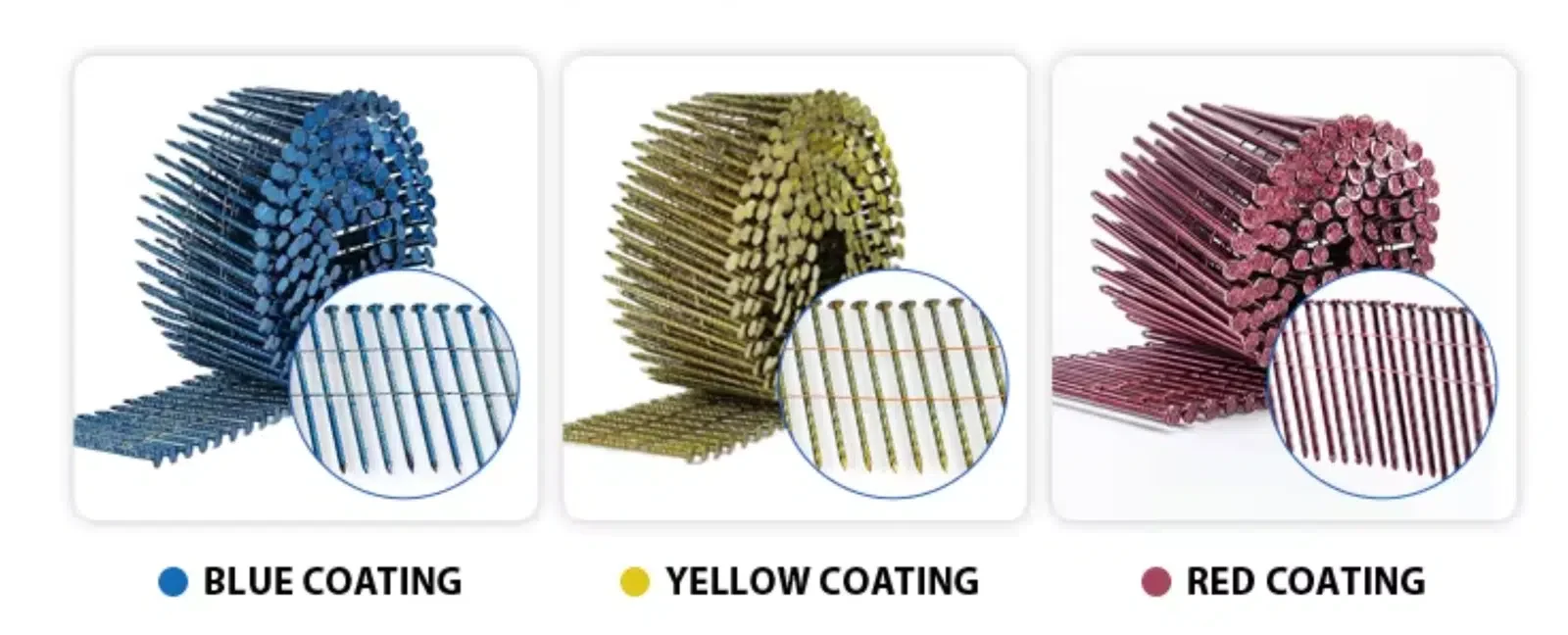
Blue, gold and silver images help identify a sample visually but do not establish the underlying metal, coating thickness or corrosion performance. A colour match can coexist with a different specification. If appearance matters, record it as an additional requirement alongside material and finish.
Ask whether the coating information applies to the finished fastener, the incoming wire or another stage of manufacture. Request the relevant grade declaration, coating specification and inspection or test evidence required for your order. A report should identify the sample and proposed coating clearly enough for you to understand what was actually assessed.
Make the test requirement precise
If your customer specifies a corrosion test, include the method, required edition, sample condition and acceptance criterion. Clarify the reported endpoint and whether the evidence concerns the same product and coating combination being quoted. ASTM B117, for example, is titled as a practice for operating salt-spray apparatus; the method name alone is not a complete product-acceptance requirement.
Treat an advertised number of test hours as a question to investigate rather than a ready-made service-life promise. Ask for the underlying report and the basis of any warranty separately. A supplier should identify available, documented options for your application; an unrelated coating certificate should not decide the order.
Preserve the agreed finish in the purchase reference
Before approving samples, align material grade, coating process, drawing revision and required documents. Check that the proposed finished fastener also meets the equipment and dimensional requirements. A repeat order should refer to this agreed specification, not simply request the same silver nails.
- Application, exposure, contacting materials and treated-wood information where relevant.
- Required steel or stainless grade, or a request to discuss documented options.
- Coating process, product specification, appearance and inspection requirements.
- Any test method, edition, sample condition and acceptance criterion.
- Nail dimensions, shank, tool model, quantity, packing and destination.
Put this guide into context
Technical references
References explain selection principles. Confirm the specification for the particular product and assembly you are buying.
Turn the details into an enquiry.
Send your current fastener, application and tool model. We can start with what you already know.