
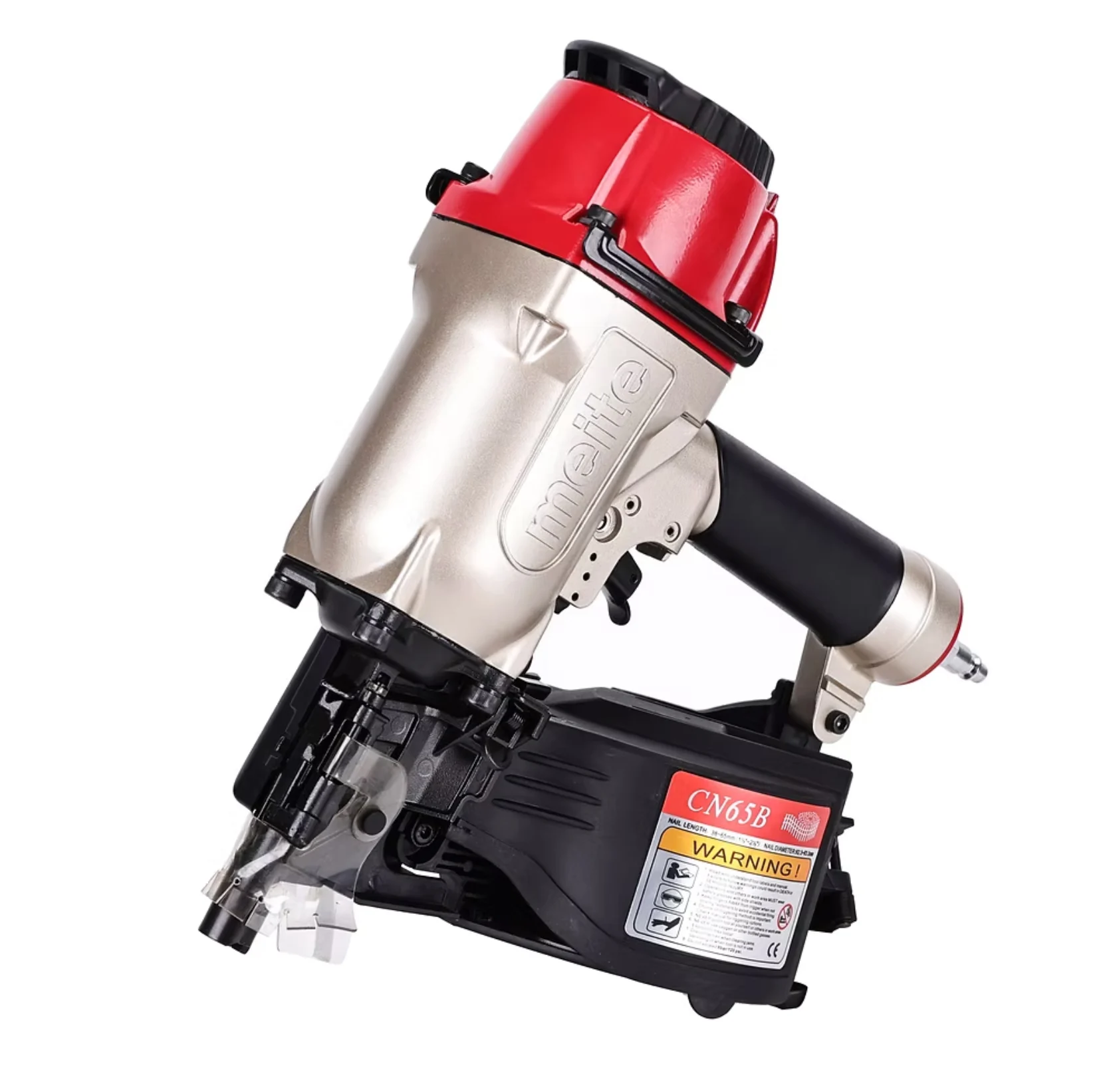
FOR THE BUYER
Send the nameplate, relevant manual pages and proposed nail drawing together, and ask the supplier to confirm one specific tool–fastener–package combination.
Compatibility review: collect evidence for each interface
Interface
Record from the equipment
Record for the proposed fastener
Confirmation needed
Tool identity
Manufacturer, full model, version and nameplate photo; corresponding original manual.
Product reference and drawing revision.
The manual belongs to the actual tool being supplied or already in service.
Nail envelope
Accepted length, shank and head dimensions from the manual.
Proposed dimensions and tolerances in identified units.
The complete proposed variant fits the documented requirements; do not approve by angle alone.
Collation and feed
Accepted collation material, angle and feed arrangement.
Wire/other collation, angle, orientation and required wire-position details.
Both nail-driving and feed geometry match the documented system.
Coil package
Permitted package dimensions and magazine capacity where specified.
Nominal count, coil outside diameter and height, plus winding direction where relevant.
The actual package is accepted; a larger count is not automatically a permitted substitute.
Automatic-line interfaces
Feeder and driving-unit models, reel support and their interface drawings.
Reel/core dimensions, package weight and winding/exit arrangement as required.
The feeder and driving unit are reviewed separately, using the proposed reel.
Sample record
Exact tool, workpiece and manual-governed operating setup.
Identified nail sample and packing configuration.
Record feeding and completed-joint observations against agreed criteria.
This is a purchasing checklist, not an operating instruction or a universal fit declaration. Original-manufacturer specifications apply to that manufacturer’s exact model. Use its manual for pneumatic requirements, loading, operation and servicing.
A matching angle is the first check, not the final answer
A coil nail may have the expected 15-degree angle and still fall outside a tool’s accepted specification. The nail length, shank diameter, head, collation and feed package also matter. For a buyer ordering both consumables and equipment, compatibility should be a documented combination rather than a broad statement that the products are universal.
Start with the original manual for the exact tool model and version. A similar model name from another manufacturer does not prove identical magazine geometry, operating requirements or fastener acceptance. Photograph the identification plate when requesting replacement nails for equipment already in service.
Use an original-manufacturer example correctly
MAX lists its own CN70 with wire collation, a 15-degree angle, a fastener-length range of 1¾ to 2¾ inches, shank diameters of .090 to .113 inches and a magazine capacity of 225–300. These published values illustrate a multi-part compatibility specification. They belong to that MAX model, not every tool carrying a CN70-style name.
The Elite coil-nail reference covers a broader set of dimensions than that single example. It would therefore be incorrect to mark the entire reference table as compatible merely because both descriptions mention 15 degrees. Compare each proposed variant and package against the actual tool documentation, then request confirmation for that specific combination.
Create a fastener-and-tool comparison sheet
Record dimensions in the units used by the tool manual and retain the source values. If a conversion is needed, distinguish a calculated equivalent from a nominal catalog label. Do not round a proposed size into the accepted range without obtaining agreement on the dimension and tolerance.
Include wire or other collation material, winding direction, coil height and outside diameter where required by the equipment. Automatic feeders may add their own requirements, so identify the feeder and driving unit separately. A larger package that reduces nominal reload frequency has no purchasing value if it does not match the feed system.
Check pneumatic requirements from the manual
Ask for the proposed tool’s own operating-pressure range, air-consumption specification, inlet connection and maintenance information. Provide your plant’s available air-system information to the equipment supplier for review. Do not copy pressure or consumption values from a different manufacturer’s model simply because the two tools appear similar.
For sample evaluation, use trained personnel and follow the tool manufacturer’s loading, use and servicing instructions. Record tool identity, nail reference, workpiece and agreed acceptance observations. If there is a feeding problem, preserve the sample and describe the conditions to the supplier; changing safety mechanisms or forcing a mismatched consumable is not an acceptable qualification method.
Send the pairing you want confirmed
An effective enquiry asks the supplier to confirm one defined pairing and identify any missing information. Keep the final tool specification and approved fastener drawing together for repeat orders.
- Manufacturer, full tool model, version and identification-plate photograph.
- Manual fastener requirements and the proposed nail reference or sample.
- Nail dimensions, head, collation, coil count and required feed geometry.
- Workpiece and production context; automatic feeder details where relevant.
- Required tool documentation, spare-parts questions, quantity and destination.
Put this guide into context
Technical references
References explain selection principles. Confirm the specification for the particular product and assembly you are buying.
Turn the details into an enquiry.
Send your current fastener, application and tool model. We can start with what you already know.