STAPLES
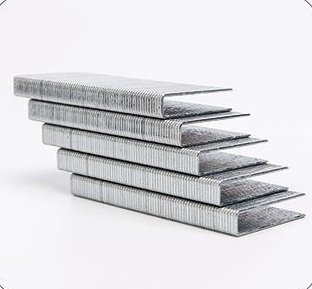
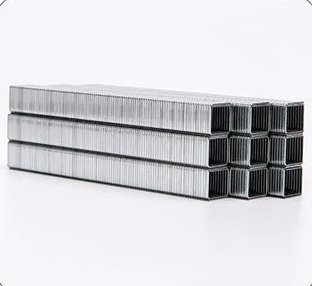
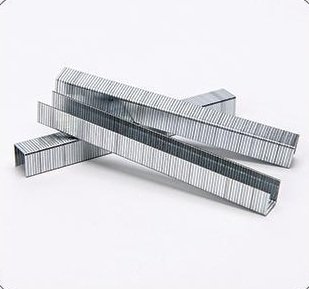
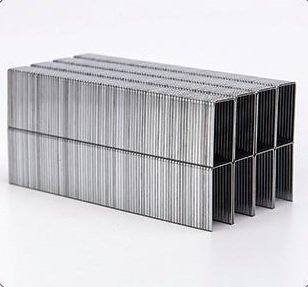
1450 Series 17 Gauge Industrial Staples
17 ga · 20–50 mm
Industrial staples for assembly and finishing work. Match the series, crown width and wire cross-section to your stapler before choosing a leg length.
Gauge
17 ga
Length range
20–50 mm
Crown width
10.5 mm
Wire width
1.57 mm
Wire thickness
Confirm drawing
Material reference
Zinc-coated wire; grade to confirm
Pieces / strip
68
Availability, material grade, finish and tool compatibility will be checked for the requested configuration and stated in your quotation.
CATALOG REFERENCE DIMENSIONS
Sizes and series
Source-confirmed nominal inch labels are shown where documented. Unverified dimensions remain in the source unit; listed references do not imply every size combination is available.
1450 Series 17 Gauge Industrial Staples · catalog reference sizes
Reference
Length (mm)
1420
20 mm / 3/4 in (nominal)
1425
25 mm / 1 in (nominal)
1430
30 mm / 1 3/16 in (nominal)
1435
35 mm / 1 3/8 in (nominal)
1440
40 mm / 1 9/16 in (nominal)
1445
45 mm / 1 3/4 in (nominal)
1450
50 mm / 2 in (nominal)
Choose a listed size and include it in your enquiry.
Wire thickness needs drawing confirmation before an order is placed.
Specification notes for ordering
Wire thickness only: the catalog text lists 1.25 mm and its diagram labels 1.00 mm. Confirm the actual wire section from the product drawing; the seven leg-length rows remain listed.
DEFINE THE ORDER, NOT JUST THE FASTENER
Packing, samples and order documentation.
Material and packing details
Parameter
Reference
Standard material reference
Zinc-coated wire
Alternative material enquiry
Stainless steel; specify grade
Fasteners per strip
68
Box / carton packing
Specify the required count; quoted for the selected size
Source feed-wire diameter
1.49 mm before forming
Source point angle
40°
Source zinc-layer reference
0.7–1.0 μm
Material and manufacturing figures are catalog references. Coating thickness is not a batch test result or a corrosion-life guarantee; stainless grade, tool fit and packing are confirmed with the selected size.
APPLICATION EXAMPLES
Where it's used
Explore the materials, joints and workshop tasks below. Match the fastener size and tool to your own workpiece before ordering.
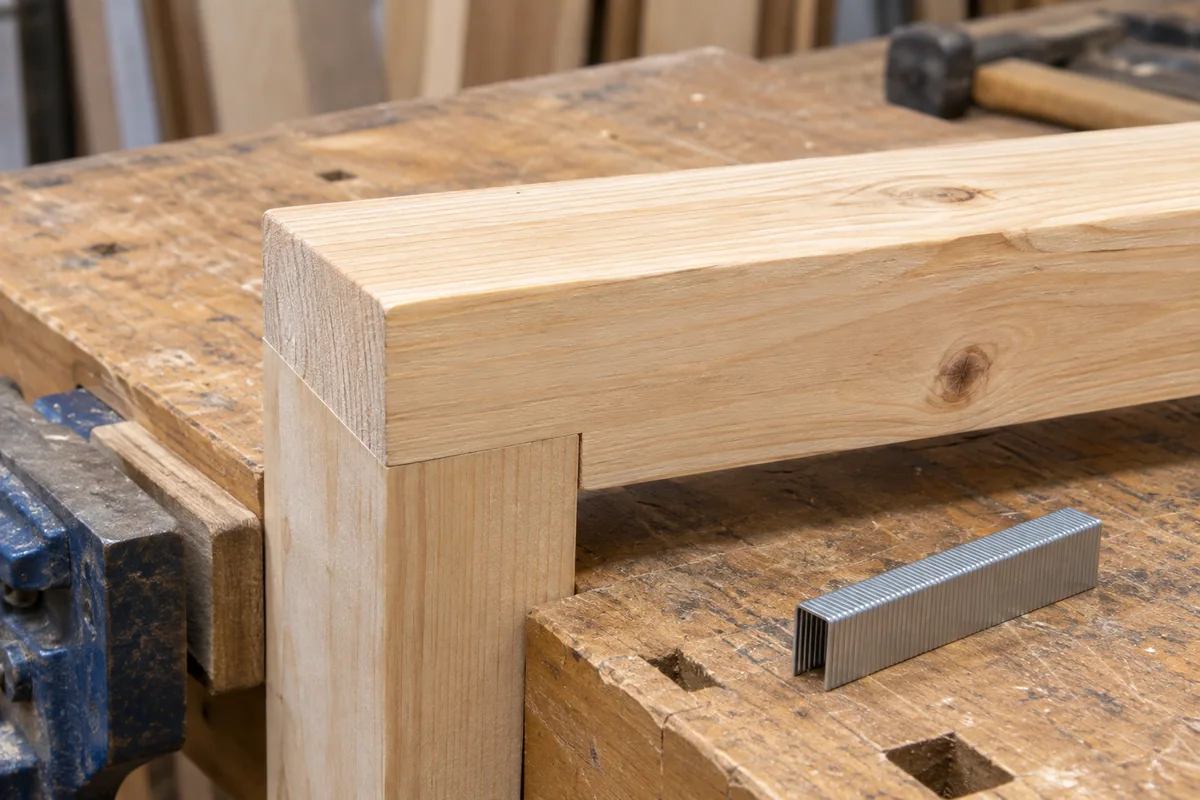
Specified timber components
Evaluate heavy-wire staples on the complete furniture component joint before production use.
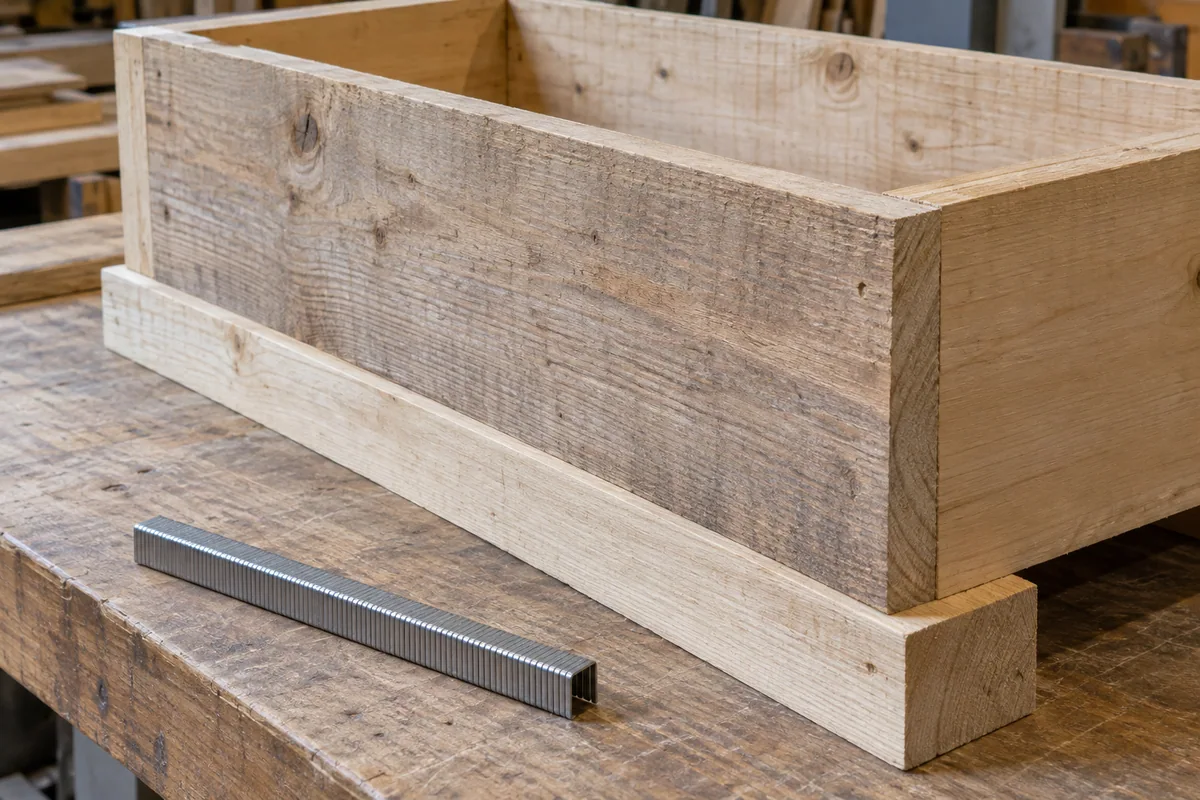
Wooden case batten assemblies
Check driving and edge splitting in the densest timber used for the specified case component.
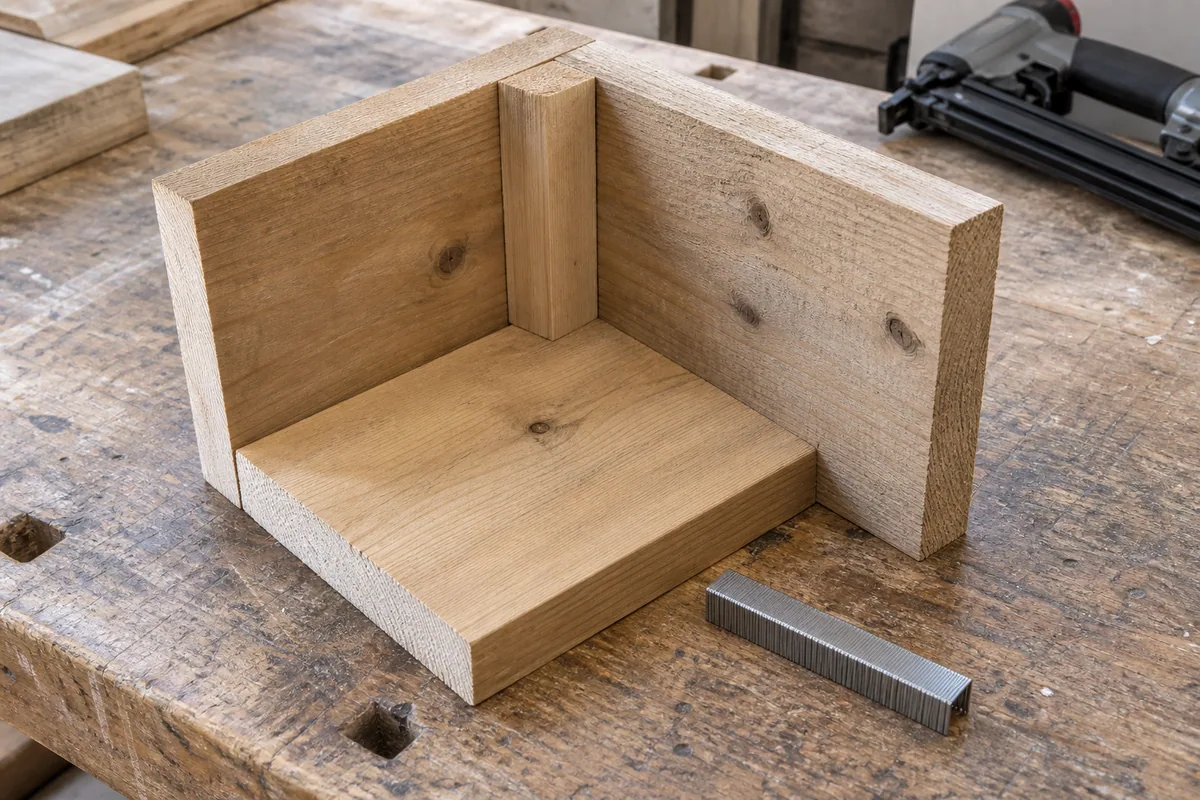
Box-component joint trials
Trial the chosen staple pattern on the narrowest fastening edge in the component range.
AI-generated application illustrations, not customer project photographs.
FOUR DIMENSIONS BEFORE A SERIES NUMBER
Read the crown, wire and leg together.
Crown width
Leg length
Wire section
Width × thickness
Measurement guide · schematic, not to scale. Refer to the listed dimensions and an approved order drawing.
1450 Series 17 Gauge Industrial Staples: check the entire cross-section
A familiar series number helps identify a starting point. The crown width, wire width, wire thickness and leg length determine whether a candidate staple matches the tool and joint.
1. Record the crown width and confirm the supplier’s measurement convention on the order drawing.
2. Record both dimensions of the wire cross-section; gauge alone is insufficient.
3. Choose a listed leg length for the material stack and required penetration.
4. Compare the dimensions with the exact stapler model and approve a sample.
Choose for your workpiece and equipment
01
Recognize the heavy-wire family
This reference lists 17GA, a 10.5 mm crown and 20–50 mm legs. It serves a different selection task from the 22GA 1416 covering staple.
02
Resolve the wire drawing
Confirm the wire cross-section before ordering: the reference table and drawing disagree on thickness. Supply your current staple sample or a controlled drawing.
03
Approve the joint and tool together
Check feeding and driving, then inspect both legs, splitting and opposite-face projection. Use your component performance requirement for retention and repeated loading.
Questions before you order
Is 1450 a longer version of 1416?
No. Their wire sizes, crowns and intended selection contexts differ. Keep them separate in purchasing and tool compatibility records.
Does a thicker staple automatically solve a weak joint?
No. Timber condition, penetration, spacing, edge distance and assembly design also matter. Verify the proposed joint rather than relying on gauge alone.
Application limits to check
- Do not substitute 1416 or another manufacturer's 14-series staple by name.
- Do not claim structural construction approval from the heavy-wire classification.
FROM THE BLOG