
FOR THE BUYER
Assign one reference to the sample, drawing and RFQ, then require the supplier to list deviations before you approve the sample or repeat the order.
Keep one identifiable fastener record from the first RFQ to the repeat order
Purchasing stage
Attach or record
Decision the record enables
Replacement identification
Buyer reference, current carton label, sample ID, dimensioned drawing or measured dimensions with units.
Distinguish the item that must match from features where an alternative may be proposed.
Comparable quotation
Technical line item, required pieces, each packing level, destination, currency/delivery basis and a list of proposed deviations.
Compare quantity and scope without hiding a changed finish, packing count or fastener geometry inside the price.
Sample review
Sample ID, drawing revision, material/finish, exact tool and workpiece, reviewer and agreed checks.
Accept or reject the specific proposed combination using a recorded result.
Purchase order
Approved reference/revision, packing schedule, required documents and accepted commercial terms.
Define the product and evidence that should accompany the supply.
Receiving inspection
Carton/product/lot identifiers, supplied document references and agreed dimensional/packing checks.
Trace what arrived back to the approved purchase specification.
Repeat order or change
Approved reference plus an explicit list of any material, geometry, coating, collation or packing changes.
Separate a repeat of the approved item from a change that needs review.
Suggested procurement record structure, not a claim that a particular inspection, certification or sample test has already been completed. Set the checks and required evidence for the actual product, application and customer requirement.
Give every request an identifiable reference
A useful fastener RFQ lets a supplier distinguish what must match from what remains open for discussion. Begin with the product family, your reference number and the purpose of the order: replacing a current item, sourcing an alternative or developing a new assembly. Attach the existing carton label and a dimensioned drawing where available.
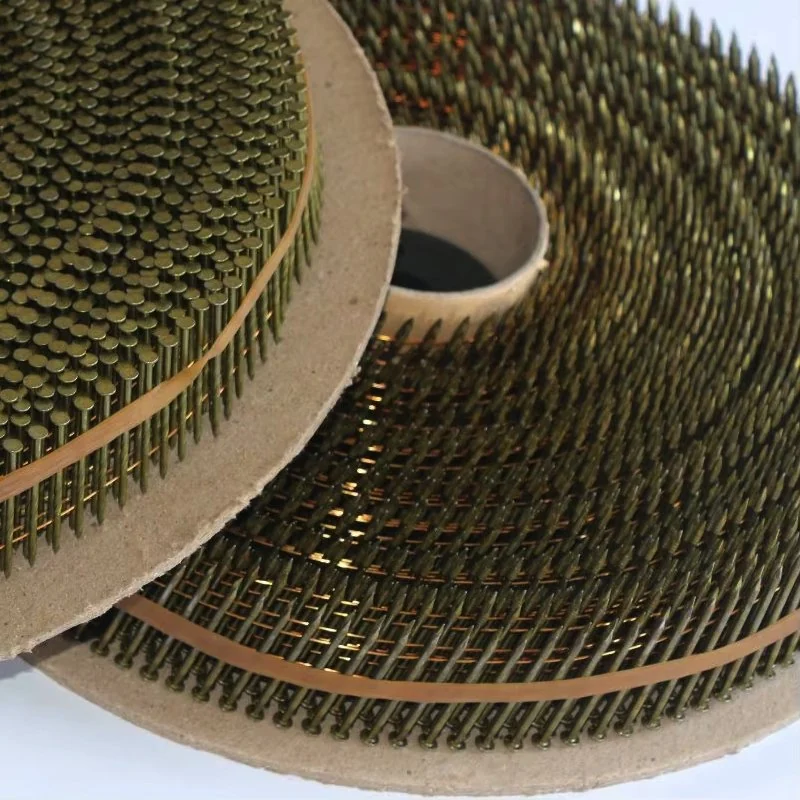
A photograph is valuable for identifying a family but rarely defines a production item by itself. Show scale, head or crown, point and collation, then add measured dimensions with units. If you send a physical sample, assign it an identifier that also appears on the enquiry, drawing and later approval record.
Write the technical line item before the commercial one
For nails, describe diameter, length, head, point, shank pattern, material and finish. For staples, specify crown and formed wire width and thickness as well as leg length. For hog rings, include open geometry, wire size, the materials being captured and the required closed connection.
Add the complete tool model for collated fasteners and explain the workpiece and environment. Mark uncertain fields as questions. This is more useful than silently selecting a common value or requesting an unspecified equivalent. Ask the supplier to list any proposed changes so they can be reviewed before the quotation becomes an order.
Make standards and evidence specific
If a project calls for a standard, state its designation, required edition and applicable product requirement. ASTM’s public F1667 scope identifies driven-fastener categories and notes limits on what it covers about collation. A reference to that standard is therefore not a substitute for a tool-compatibility check.
Request the documents needed for the actual proposed product and check their scope, identity and relationship to the supply. Keep material evidence, dimensional inspection, coating information and application-specific performance requirements distinct. Do not accept a company-level certificate as automatic proof of every property of every nail in a mixed shipment.
Define quantity and packing in the same units
Give the required quantity with units, then specify pieces per coil or strip, units per box and boxes per carton where these matter to the order. Ask the supplier to confirm any unknown packing levels. A carton total without its contents can hide a substantial difference between quotations.
Include destination, packaging artwork, label language, carton markings and handling constraints. Request a quotation that states its currency, delivery basis, payment terms, validity and proposed timing. Minimum quantities, samples and lead times should be confirmed for the actual request; they should not be assumed from an old website statement or another buyer’s order.
Approve a defined sample and preserve the record
Before approving production, align the sample identifier, drawing revision, material, finish and packing schedule. Agree who reviews the sample, what observations or tests are required and how the result is recorded. A message saying looks fine is a weak reference when a repeat order arrives months later.
For repeat purchasing, quote the approved reference and revision instead of only the product name. Ask the supplier to identify changes to material, dimensions, coating, collation or packaging. This creates a clear review point without implying that every future change is acceptable.
- Technical reference, drawing or sample identifier and required quantity.
- Workpiece, tool model, material and finish requirements.
- Packing schedule, destination and requested commercial terms.
- Required documents, sample-review criteria and approval responsibility.
- A request to confirm availability and identify any proposed deviations.
Technical references
References explain selection principles. Confirm the specification for the particular product and assembly you are buying.
Turn the details into an enquiry.
Send your current fastener, application and tool model. We can start with what you already know.